



There is a conversation happening in the best wine bars of New York, Los Angeles, and Chicago. It usually starts when a sommelier leans toward you, lowers their voice like they’re about to tell you something slightly illegal, and says: “Have you tried anything from Georgia?” Not the state. The country.
Echoes of Wine, now streaming on SOMM TV, is the film that puts that conversation in context. And the context is bigger, deeper, and more delicious than most people expect. This is a film about being there: in the cellars, at the table, in the vineyards, and occasionally halfway inside a qvevri, wondering whether the echo might tell you something you needed to hear
What the Film Is About
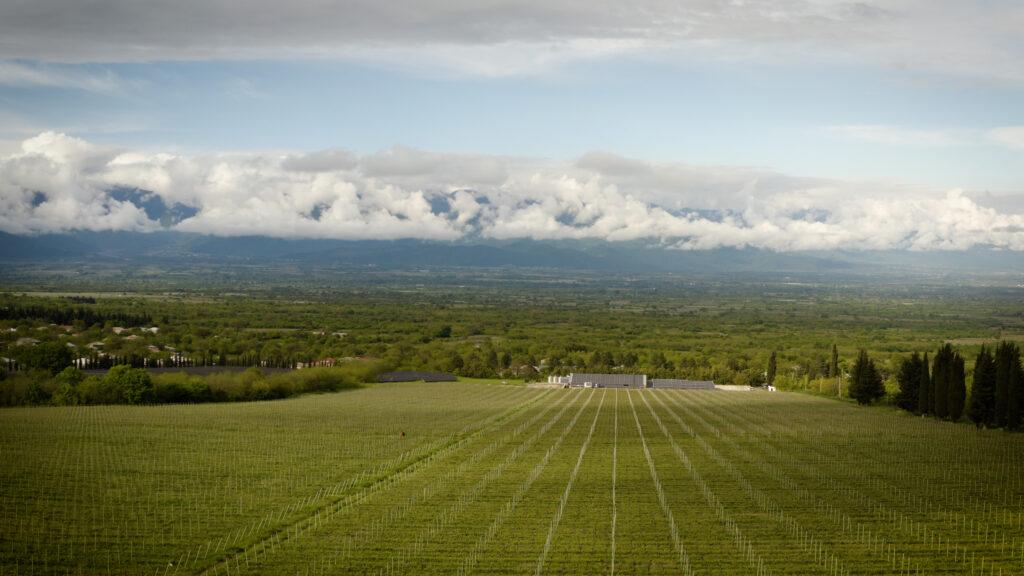
Echoes of Wine is not a history lesson, though the history is staggering. It is a film about a country that never stopped doing what the rest of the world is only now rediscovering: farming without shortcuts, fermenting with patience, and trusting that the land — this specific land, its clay soils, its mountain air, its ancient grape varieties — is already telling you what to do.
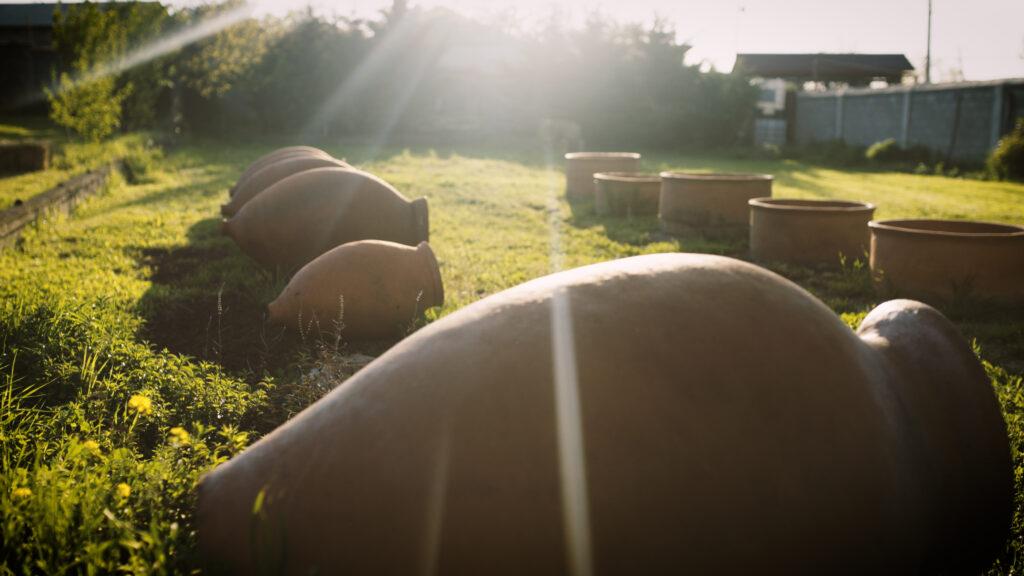
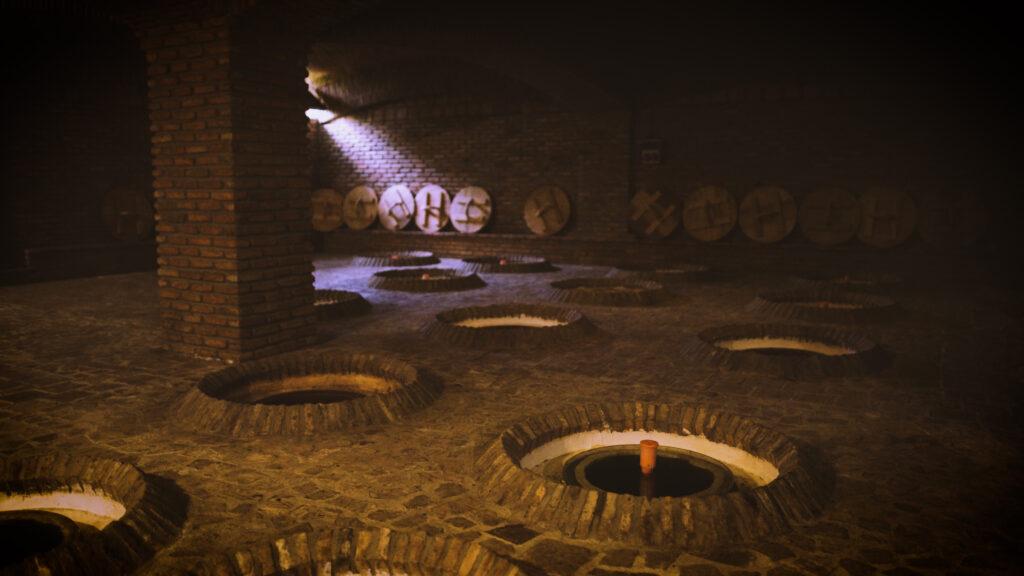
The documentary follows the SOMM TV team through historic monasteries where winemaking and scholarship were once taught side by side, into underground cellars where qvevri — the iconic clay vessels at the heart of Georgian winemaking — sit buried in the earth as they have for centuries, and across vineyards worked by some of the most compelling winemakers in the natural wine world today.
At its center is Saperavi, Georgia’s great red grape: ink-dark, structured, built to age, and increasingly appearing on wine lists from New York to Tokyo as sommeliers and collectors start paying the kind of attention that tends to make prices go up. You have been warned.
And most importantly, it is about winemakers — utterly different from one another — who together explain why such a small country manages to produce wine of such unexpected diversity.
The Winemakers
Iago Bitarishvili is, for many American natural wine lovers, already a name that needs no introduction. His wines have appeared at natural wine fairs and on the lists of serious wine bars across the US, and his reputation among sommeliers who care about this movement is about as solid as a buried qvevri. What the film adds is context: sixty-year-old bio-certified vines in Kartli, a cellar philosophy that treats intervention as a failure of trust in the land, and a clarity of purpose that makes the word “natural” feel less like a marketing category and more like a description of something with genuine moral weight. Watching Iago work, you understand why the natural wine world looks to Georgia the way it does — not as a curiosity, but as a source. He has never been doing anything different. The rest of the world finally caught up.
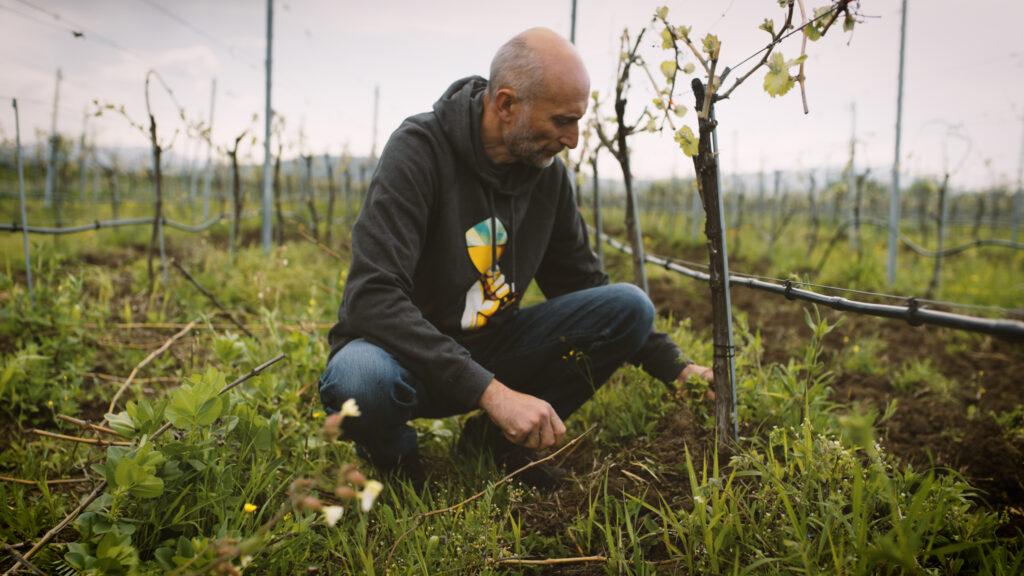
Lado Uzunashvili is an eleventh-generation Kakhetian winemaker with a story that deserves its own film. He spent twenty-five years working internationally, including decades in Australia, where he planted Saperavi at a time when almost no one in Australia was paying attention to Georgian varieties. That was not a gamble. It was a conviction, backed by eleven generations of understanding exactly what that grape could do in the right hands. He eventually came home — because some pulls are stronger than ambition — and the film catches him in full: as a thinker, a promoter, and a winemaker who has done more than almost anyone to put Saperavi on the global map.
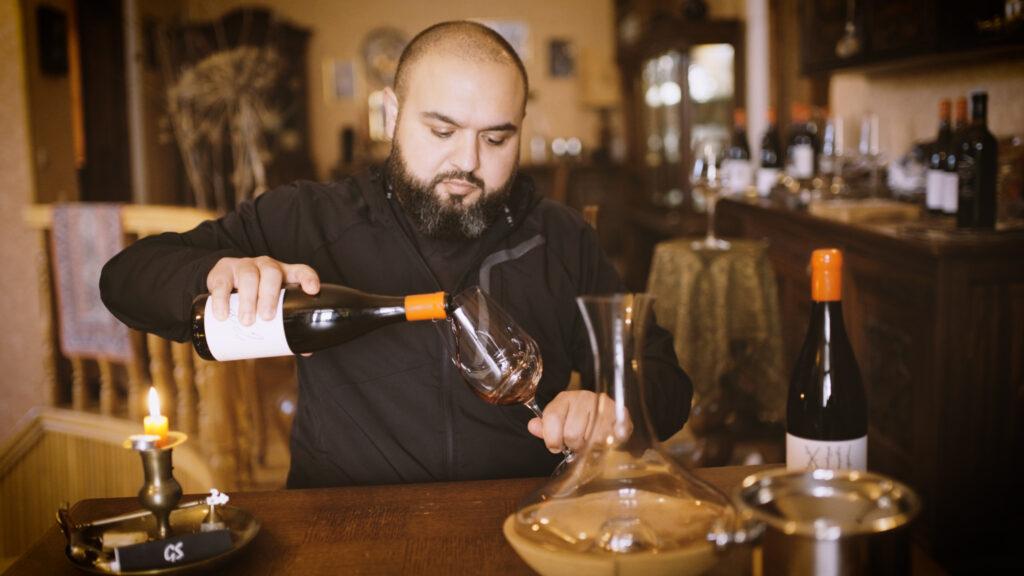
Giorgi Solomnishvili is a boutique producer in Kakheti who has made one of the clearest creative decisions in Georgian wine: he works with Saperavi, and only Saperavi, with the focus of someone who has decided that one grape, understood completely, is more than enough for a lifetime. His production is small, his labels are minimalist, and his wines are the kind that make you stop mid-sentence and just pay attention. His philosophy, as the film captures it, is straightforward: wine is not a product. It is something you put your soul into. His Saperavi expressions — each with a very personal story behind the bottle — are the proof.
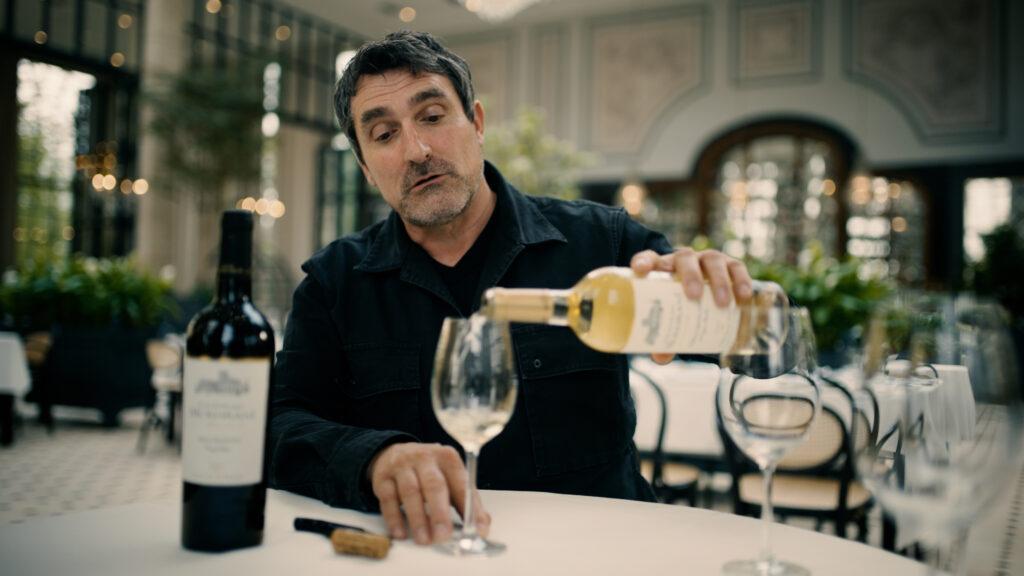
Patrick Honnef arrived from Bordeaux in 2013 with the intention, presumably, of eventually going back. He did not go back. Now directing production at Château Mukhrani — one of Georgia’s most storied estates, with nineteenth-century cellars and a vineyard that ranks among the world’s best — he represents something the film handles with welcome restraint: the quietly astonishing fact that serious winemakers from serious wine countries come to Georgia and simply… stay. That is not a footnote. That is a verdict.
What the Film Leaves You With
These are not promotional portraits. They are conversations — about terroir, about memory, about what it means to make wine in a place where the practice predates recorded history and still feel like you are doing something urgent.
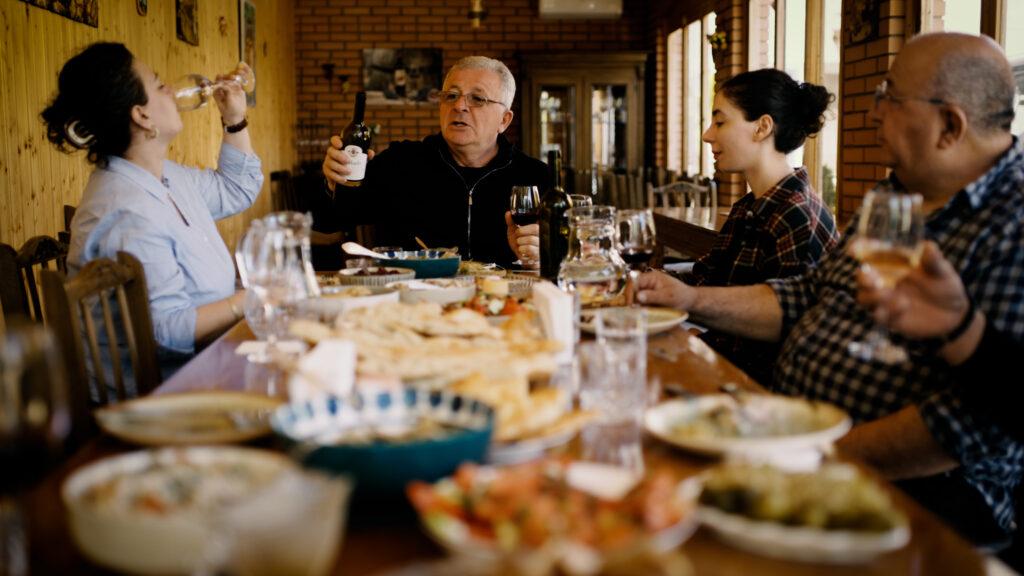
One word of advice before you press play: do not watch this on an empty stomach. The supra — Georgia’s legendary feast table, which appears more than once and with full cinematic justice — is one of the great eating and drinking traditions on earth, and the film makes a quietly devastating case that wine was never meant to be separated from food, company, and an unhurried succession of toasts. Consider it a prompt.
Most likely, after watching this film, you’ll find yourself ordering a Georgian wine at a restaurant. And when the person next to you asks what’s in your glass, lean in slightly and say:
“Have you tried anything from Georgia? Not the state.”
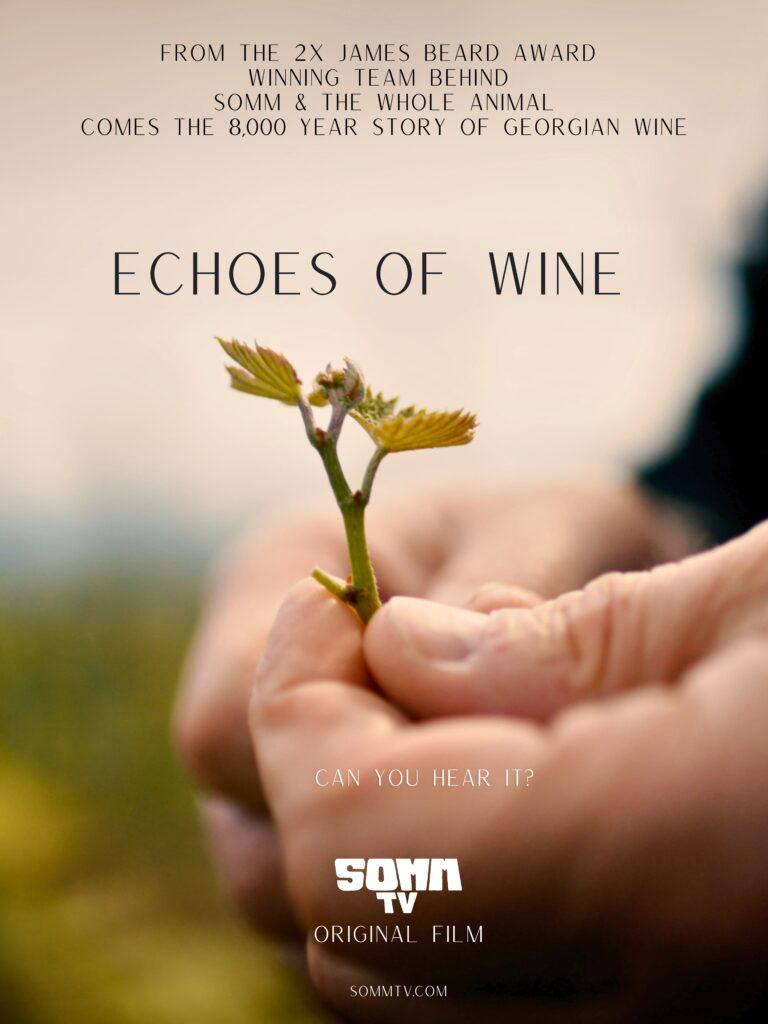
ECHOS OF WINE premieres world wide on Sommtv.com on July 1st, 2026

